
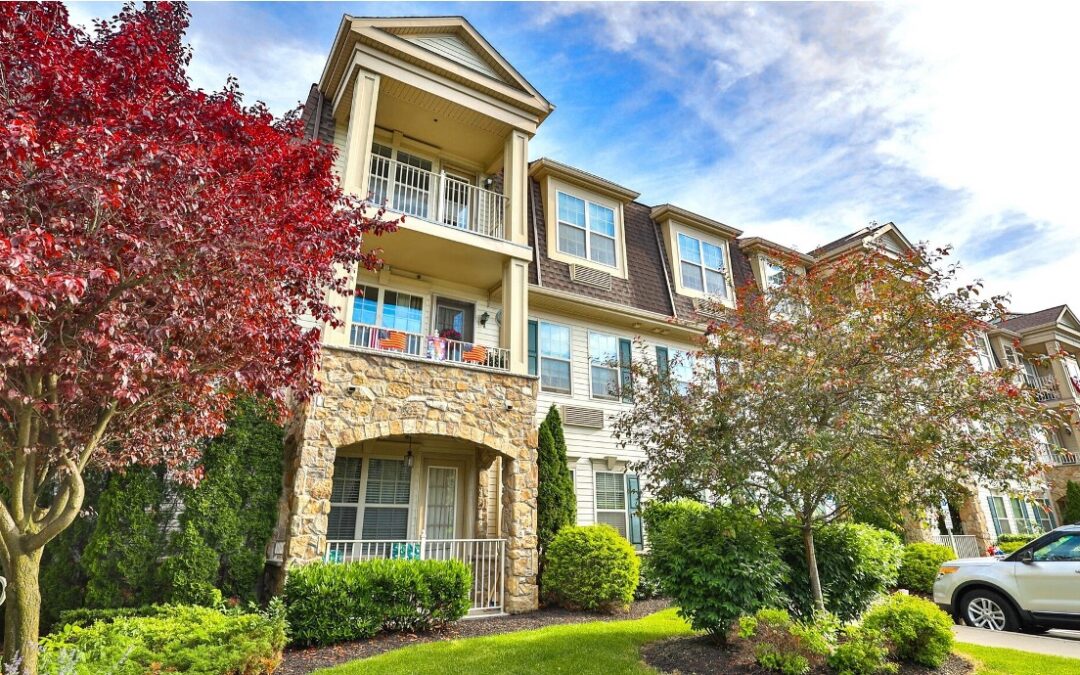
You get four real seasons here. That means a winter wardrobe and a summer wardrobe, snow gear and beach gear, a shovel and a grill. Your apartment was designed with one closet per bedroom and maybe a coat closet by the door. The math doesn’t work, and it isn’t your fault.
Here’s what usually doesn’t fit, what to do about it, and — honestly — when you don’t need to do anything at all.
First, a word about the balcony
The patio or balcony is where most of this ends up. It’s understandable, and it’s usually a problem.
Most leases in this area have language about what can be stored outside, and a lot of them prohibit it outright. Bikes chained to the railing, boxes under a tarp, a grill wedged in the corner — any of these can turn into a lease notice. Some complexes send one warning; some go straight to a fee.
Beyond the lease, it’s just hard on your things. A Whitehall winter goes above and below freezing repeatedly, and anything sitting out there freezes and thaws over and over until it cracks, rusts, or falls apart.
Worth pulling your lease out and reading that section once. It takes two minutes and it’s better than finding out in a letter.
What genuinely doesn’t fit
The other season. This is the biggest one. Half your clothes are wrong six months of the year, and so is half your gear. Winter coats, boots, and blankets in July. Fans, beach chairs, and coolers in January.
Anything with wheels or a hull. Bikes, kayaks, paddleboards, kids’ scooters and bike trailers. These are the single most common reason apartment renters run out of room, and the most common thing that ends up chained to a railing.
Patio furniture and the grill. Grilling season here runs maybe May through October. That’s six months where the furniture and the grill need to live somewhere that isn’t your living room.
Holiday decorations. A tree, the lights, the bins. Everyone’s is in a closet that’s needed for something else.
Furniture from before. If you downsized into your apartment — after a move, a separation, a parent’s house — you probably kept pieces that don’t fit the new place but aren’t things you’re ready to let go of. That’s a completely normal reason to need storage, and it doesn’t have to be permanent.
Kids’ things between kids. The crib, the high chair, the bin of clothes in the next size up. Nobody wants to buy that twice.
Side business inventory. More people run something out of a spare corner than you’d think — resale, crafts, a trade with tools. Once inventory reaches the kitchen table, it’s time.
What about the storage locker in the building?
If your complex offers one, use it. Seriously. It’s usually included or cheap, and if your overflow fits, you’re done — don’t spend money you don’t need to.
Two things to check first. Most building lockers are small, roughly a closet, so measure before you assume the bikes will fit. And most aren’t heated or cooled, which is fine for plastic bins of decorations and bad for anything wooden, upholstered, electronic, or made of paper.
If it fits and it’s the right kind of stuff, you’re all set. If it doesn’t, that’s when the conversation is worth having.
What size you’d actually need
Most apartment renters need much less than they expect.
A 5×5 is about a large walk-in closet. Off-season clothes, holiday bins, a few boxes, maybe one small piece of furniture. For the seasonal-swap problem alone, this is usually the whole answer.
A 10×5 is roughly a studio apartment’s worth. This is the one for bikes, patio furniture, and the grill, plus the seasonal bins on top of it. It’s the sweet spot for most apartment households in Whitehall.
A 10×10 is where you go if you’re holding real furniture from a previous place.
We also have a few different kinds of units — drive-up, interior first floor, second floor, and ADA-accessible — which matters more than it sounds. If you’re hauling a kayak in and out every few weeks, a drive-up unit saves you real effort. If you’re storing a hand-me-down dresser you won’t touch until spring, a second-floor unit costs less and does the same job.
The seasonal swap, made simple
If you take one idea from this, take this one.
Twice a year — once in late April, once in late October — spend an hour trading out your apartment. Winter things go to the unit, summer things come home. Then reverse it.
It sounds like a chore. In practice it’s about an hour, and it means your apartment holds only what’s actually in use. Most people find it does more for how their place feels than any amount of organizing.
When you honestly don’t need a unit
We’d rather say this than not.
If everything on your list fits in a building locker, use the locker. If you’re storing things you already know you’ll never use again, the answer is a donation run to the Goodwill on MacArthur, not a monthly bill. And if it’s one or two boxes, a family member’s basement is free and we can’t compete with that.
Storage is worth paying for when what you’re keeping is genuinely worth keeping — seasonal, sentimental, or expensive to replace. Not as a way to avoid a decision.
If you want to talk it through
We’re at 2813 Lehigh Street in Whitehall, just down from the mall, and we’re a family-owned local business — not a corporate chain with a call center in another state. Come in and describe your apartment and what’s overflowing, and someone will tell you honestly what size you need, including when the answer is a smaller unit than you came in asking about.
Office hours are Monday through Saturday, 9am to 5pm. Unit access runs 6am to 10pm, every day, so the seasonal swap can happen on a Sunday morning if that’s when you’ve got time.
Call us at (484) 246-6436. — you’ll get a neighbor, not a script.